Most journaling advice is about processing. This one is about accounting.
There is a particular kind of exhaustion that has nothing to do with how much you did. You worked hard, you got through it, and you still finish the week feeling oddly shortchanged. Usually the cause is not that the days were full. It is that the days were full of things you did not choose, arranged in an order you did not pick, and you never once looked at the shape of it.
Ten minutes a week is enough to see the shape.
Why a weekly rhythm beats a daily one
Daily journaling measures how you feel today. Weekly journaling measures how you have been living. Those are different questions, and the second one is the one that produces useful information.
The mechanics are unglamorous. You need one recurring slot, ideally the same one, and roughly ten minutes. Sunday evening works for some people; Friday afternoon works better for others, because it is close enough to the week to be accurate and far enough to be clear. The important part is that it repeats, because a repeated practice produces comparable entries and a single one does not.
Keep the same notebook or the same file. Not for sentiment, but so that you can flip back six entries without effort. Our three-minute journaling covers the daily version if you want both.
The four prompts
Answer each in one or two lines. Do not elaborate. The value here comes from speed and repetition, not depth.
1. Where did the hours go? List the four or five things that took the most time this week, in order, with a rough estimate for each. Most people find their first guess is wrong in an interesting direction.
2. What did I say yes to that I did not want to? The useful version is not the big commitments. It is the small ones: the meeting that could have been an email, the favour, the reply you sent immediately because not replying felt worse than replying.
3. What took more energy than it returned? Include the ones that looked good on paper.
4. What do I want to be different next week? One change. Not a list. A list has nowhere to go.
Productivity methods usually ask question 1 and stop there. Questions 2 and 3 are what turn the exercise from a record into a change.
A suggested tool
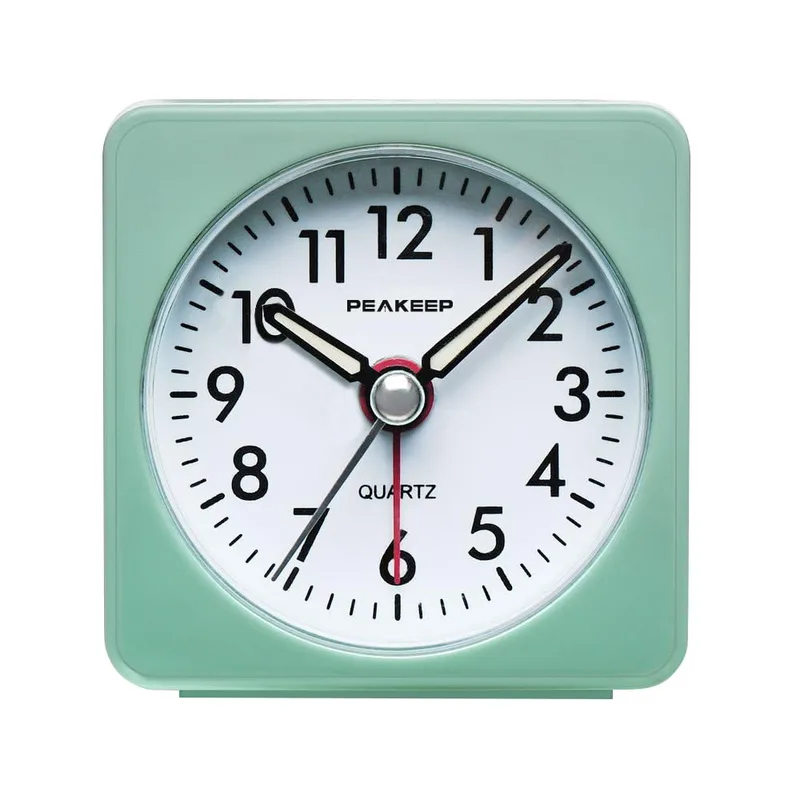
A small clock you can see from where you write
Ten minutes is long enough to drift and short enough to feel like a commitment. A visible clock is the simplest way to keep the promise honest, especially in the first few weeks.
View on AmazonThis page may contain affiliate links to products we think are worth considering. If you buy through a link, we may earn a small commission at no extra cost to you. Our recommendations are independent, and they are suggestions, not prescriptions.
What to do with the answers
The practice only pays off if something changes afterwards. Three moves that work:
Name one recurring thief. Across four weeks, one item usually appears every time. Most often it is transitions, meetings that could have been messages, or the first ninety minutes after waking.
Convert one yes into a no, or into a later. Pick the smallest one. The point is to have evidence that your answers change what happens, because the belief that your time is fixed is usually what generates the feeling of not having any.
Protect one recurring block. Take the hour you have just discovered you value most and put it in the calendar before the week fills. An unblocked hour is the rarest resource on this list.
When it feels pointless
Some weeks the practice will feel like a waste of ten minutes. This is common, and it is worth knowing why, because the reason changes what you do next.
If it feels pointless because nothing is changing, the prompts are too abstract. Drop question 4 and write only question 1 for a month. Specific numbers are more motivating than general reflection.
If it feels pointless because the answers are uncomfortable, that is actually the practice working. Our guide to when journal prompts feel too intense is written for exactly this, and there is a version of the exercise for days when writing is too much.
If it feels pointless because you have no time, then the ten minutes is the wrong length. Use a single question on a Sunday, which takes two minutes, and keep the streak. Our micro-self-care practices has shorter versions.
A note on privacy
Time accounting is unusually revealing: it maps out your obligations, your obligations to other people, and what you actually want. If you keep this in a notebook, that is a private object. If you keep it in a note on your phone, consider that notes sync to cloud services.
This is a practical point rather than a moral one, but it is the kind of thing that changes whether people keep a journal going for years.
Persistent feelings that your time is entirely out of your control, or that you have stopped being able to notice what you want, are worth talking through with a qualified health or mental-health professional. This article is educational and is not medical advice.
Further reading
- 3-Minute Journaling — the daily version, if a weekly rhythm is too slow
- When Journal Prompts Feel Too Intense — how to write when writing is hard
- Creating a Closing Ritual — protecting the end of the day so the week has edges
- Transition Rituals Between Work and Home — the first ten minutes after work decide a lot of the evening
Sources
- PubMed: Expressive writing and health outcomes
- Frontiers in Psychology: Written expressive activity and resilience
- American Psychological Association: Journaling to improve health
- PubMed: Self-distancing and emotional distress
Continue gently
Journal Prompts for When Your Mind Will Not Go Quiet
Prompts for the nights when you sit down to write and discover you have nothing to say, plus a way to start when starting is the hard part.
10 Inner Child Prompts for Hard Days
Ten short, soft journaling prompts for the days when nothing is working, written to take under ten minutes and ask nothing difficult of you.
Inner Child Journaling: A Gentle Practice for Self-Connection
A non-clinical inner child journaling practice with prompts, a clear stopping point, and options for emotionally difficult days.