There is a specific problem with evenings. The work is finished, or at least paused, but nothing in your body has registered that. You are still holding the shape of the day: the unresolved message, the conversation you should have had differently, the tab that is still open somewhere.
Bedtime routines do not fix this, because they are task lists, and task lists do not mark anything as ended. A closing ritual does something different. It is a short, repeated sequence whose only job is to draw a line.
Why most wind-down routines fail
Most evening routines are assembled from advice about sleep hygiene, and they are aimed at insomnia. That is a reasonable goal, but it leaves the daytime problem untouched.
Three failure modes are common:
The ritual is a checklist of things you should stop doing. Screens off, herbal tea, no sugar. This is not a closing ritual, it is a set of prohibitions, and prohibitions do not feel like endings. There is nothing in a list of things you are not doing that says the day is complete.
The ritual only happens on good nights. A ritual that requires energy, presence, or a clear head is a ritual you will drop on the week you need it most. Ours has to survive being done badly.
The ritual has no final step. A sequence that just trails off leaves the mind still open. The last action needs to be a marker, not a maintenance task. Closing a book, drawing a curtain, plugging in the phone elsewhere, turning off one specific lamp.
What makes a ritual work
Four properties, in order of importance:
It is short and it is fixed. Fifteen to twenty minutes, same order, most days. The repetition is what teaches your nervous system that the sequence means something. A thirty-minute version you do on Sundays is pleasant; a fifteen-minute version you do every night is a marker.
It ends with a threshold gesture. Something physical that closes something: the front door, a notebook you close, a lamp you switch off, a cup you put back on the shelf. Our page on transitions between work and home leans on this idea at the smaller scale, and the ritual of tea is the same principle applied to a single object.
It does not require you to feel ready. You will do it on evenings when you are wired, distracted, or irritated. Build for that version, not the ideal one.
It leaves nothing open. Anything the ritual surfaces and does not resolve goes on a list. That list is the point. An unresolved thought left floating is the main thing that keeps people awake.
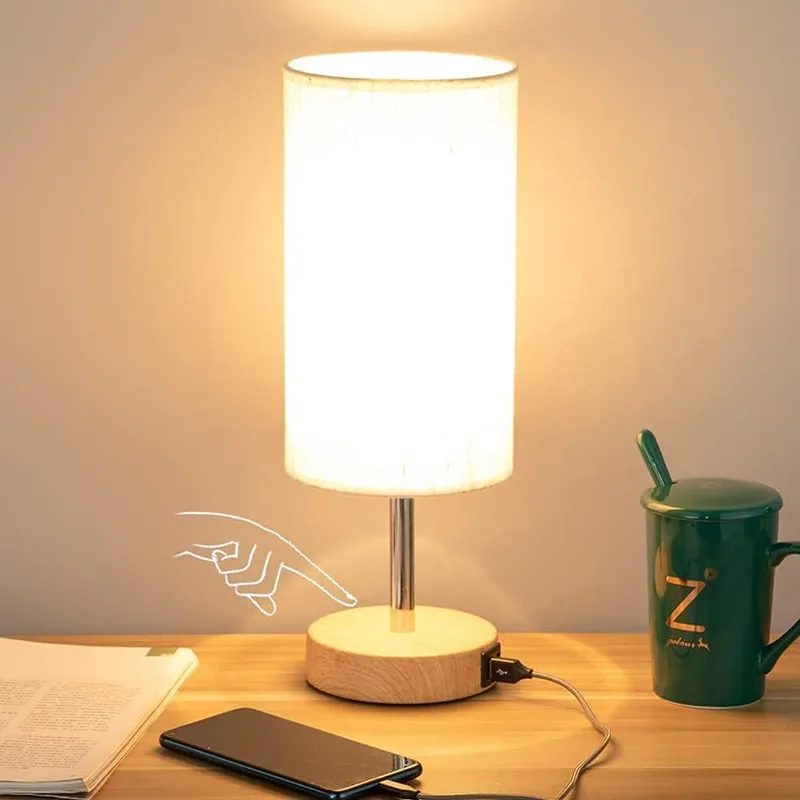
A suggested tool
One lamp that only gets switched off at the end of the day
A single lamp used as the final step is the cheapest version of a closing ritual. The specificity is what matters: this lamp, at this moment, means the day is done.
View on AmazonThis page may contain affiliate links to products we think are worth considering. If you buy through a link, we may earn a small commission at no extra cost to you. Our recommendations are independent, and they are suggestions, not prescriptions.
A twenty-minute closing ritual
Four phases, five minutes each. Use the whole thing or keep whichever phase does the most work.
1. Land (5 min). Sit down. Feet flat. Do not start with a screen. Name three things that happened today and then say, out loud or on paper, that they are now finished. This sounds like a formality and it is not; the point is the verbal marker.
2. Write it down (5 min). One page: what is still open. Every loose end, however small. Two columns: things you can act on tomorrow, and things that simply will not be resolved. The second column is usually the longer one, and seeing that it exists is often the whole value of the exercise.
3. Put one thing away (5 min). A physical object associated with the day goes back in its place. The work bag, the notebook, the laptop, the shoes by the door. Whatever you choose, the object has to leave the room or the room does not know the day ended.
4. Threshold (5 min). Tea, a few pages of something, a lamp switch-off, the curtains. Do the same thing in the same order. Then lie down. If your evening has included screens, one minute of digital boundary before bed handles the part where the day comes back in.
Make it survive a bad evening
This is the only test that matters. Ask what happens on the night when you arrive late, tired, and carrying a bad afternoon.
Three ways to build for it:
Shrink, do not skip. A two-minute version counts as having done it. The marker only has to happen, not to be elaborate. Skipping teaches your nervous system that the ritual is optional, which is the opposite of what a boundary does.
Remove the steps that need energy. If one phase is the one you always drop, remove it from the routine entirely rather than treating it as optional. A four-step ritual you complete beats a six-step ritual you abandon in March.
Keep one element absolutely fixed. If only one thing survives, make it the threshold gesture. It is the part carrying the meaning.
If your problem is that the day never really ends
Some people cannot close the day because it does not close. Work follows them into the evening through a phone on the pillow, a laptop in another room, a work chat that never goes quiet. In that case the ritual is not the missing piece, and no ritual will be.
The change that matters is structural: a device that does not come into the bedroom, or a defined cutoff time at which work communication stops. That is a boundary rather than a ritual, and it is covered in 15 ways to wind down when overstimulated and 15 slow bedtime rituals.
If evenings regularly end in distress, or sleep problems persist despite changes like these, that is worth discussing with a qualified health or mental-health professional. This article is educational and is not medical advice.
Further reading
- Transition Rituals Between Work and Home — the smaller version of the same idea
- One Minute of Digital Boundary Before Bed — the step most evening rituals are missing
- What to Do in the First Five Minutes of a Difficult Morning — the other end of the day
- 15 Slow Bedtime Rituals — a longer list for when you want options
Sources
- National Sleep Foundation: How to close the day before bed
- PubMed: Autonomic nervous system and sleep
- Centre for Humane Technology: How to reclaim your attention
- National Institute of Mental Health: Relaxation techniques
Continue gently
Micro Self-Care Practices for Days When You Have No Time
Small, realistic self-care practices for busy days, with a focus on reducing pressure rather than adding another task list.
A One-Minute Digital Boundary Before Bed
A small, realistic way to create a little distance from your phone before sleep without making digital habits another perfection project.
Five Tiny Transition Rituals Between Work and Home
Simple, low-pressure ways to mark the shift from work to home so the day does not have to follow you through the door.