Most journaling advice assumes the hard part is knowing what to write. Often it is not. The hard part is that sitting down with an empty page requires a kind of confidence — confidence that what comes out will be worth something — and on the days you most need to write, that confidence is exactly what you do not have.
So you open the journal, and the page looks back, and after two minutes you close it and tell yourself you will do it later.
This is a prompt list for that specific moment, plus one adjustment to the setup that makes starting considerably easier.
Before the prompts: change what the page is for
The expectation that the page should receive something meaningful is the main thing standing in the way. It turns a notebook into a test you might fail.
The page is not a record. It is a place to put things down so they stop circling.
That reframe matters more than any particular prompt. Once you stop expecting insight, the ordinary details are allowed, and the ordinary details are usually where the useful material is anyway.
A suggested tool
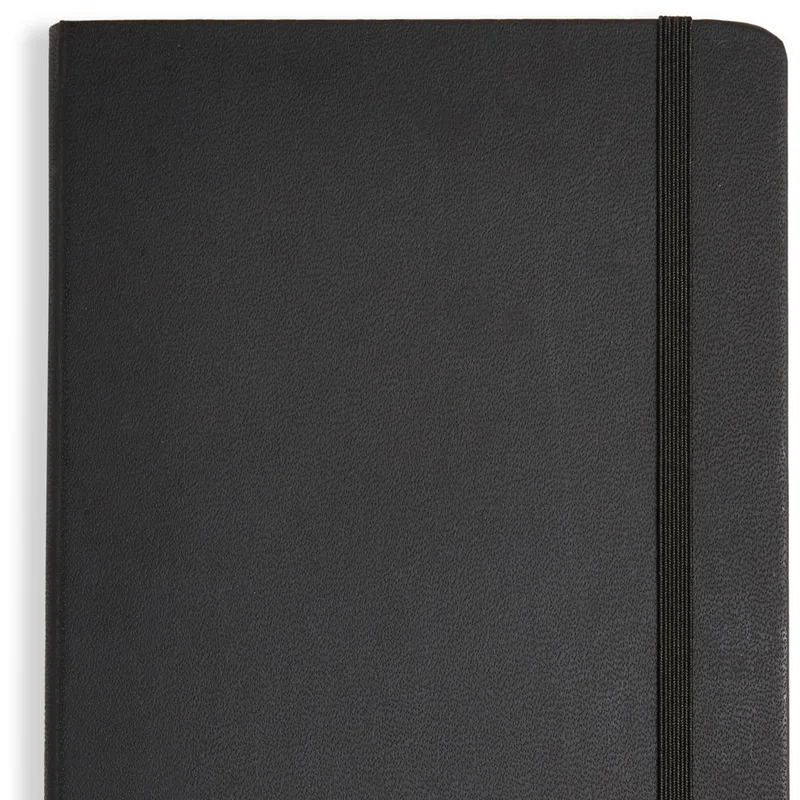
A notebook kept somewhere you write regularly
These prompts need somewhere to accumulate. Writing them on a phone works, but paper makes it easier to write the unedited answers, which are the useful ones.
View on AmazonThis page may contain affiliate links to products we think are worth considering. If you buy through a link, we may earn a small commission at no extra cost to you. Our recommendations are independent, and they are suggestions, not prescriptions.
Write by hand and in the same place. Not because handwriting is therapeutic in itself, but because a consistent setup removes one decision. New notebooks, new locations, and new times all add a small amount of friction to an activity that is already hard to start.
Do not skip days retroactively. A missed week is not a debt to be repaid with three pages. Open the page and start from today. Guilt about a lapse is a much better reason to stop journaling than a blank one.
The prompts that work when you have nothing
These are ordered roughly from most mechanical to least. Start at the top of the list on bad days.
Physical inventory. List five things you can see without moving your head. Then five you can hear. This is grounding rather than reflection, and it works because it gives the mind a task with a definite end.
The weather and the time. Write what it looks like outside your window, right now, and what time it is. That is it. This is the lowest-effort entry that still counts, and it is often the one that later opens something up.
What took the most space today. Not what happened — what occupied the most mental room. Usually the answer is a three-second interaction that had nothing to do with being the biggest thing that happened.
List one thing you avoided. No explanation required. Just the name of it. This is the most useful prompt on the list for people who use avoidance as their main coping strategy.
A list, not a paragraph. Everything currently in your head, in any order, with no editing. Half of these will be about a conversation from three years ago.
What you are pretending is fine. This one works because honesty about a small thing often opens a larger one.
Two versions of tonight. Write the evening you are actually having, then the evening you would have had if you had done what you meant to. Do not reconcile them. The gap between the two is the entry.
Prompts for a quiet mind specifically
Once you have started, these reach further. They are for the nights when you want to go somewhere rather than just discharge.
Who am I being today? Not who you are — who you are being in this particular week. The answer is usually a role, and noticing which one is running is most of the insight.
What did I need today and not ask for?
What is the version of this that I keep telling other people?
When did I last feel like myself? Write the last specific moment, not the general era. The specificity is usually what makes it useful.
If I had said no to one thing this week, what would I have had instead?
What am I being loyal to that I never chose?
A suggested tool
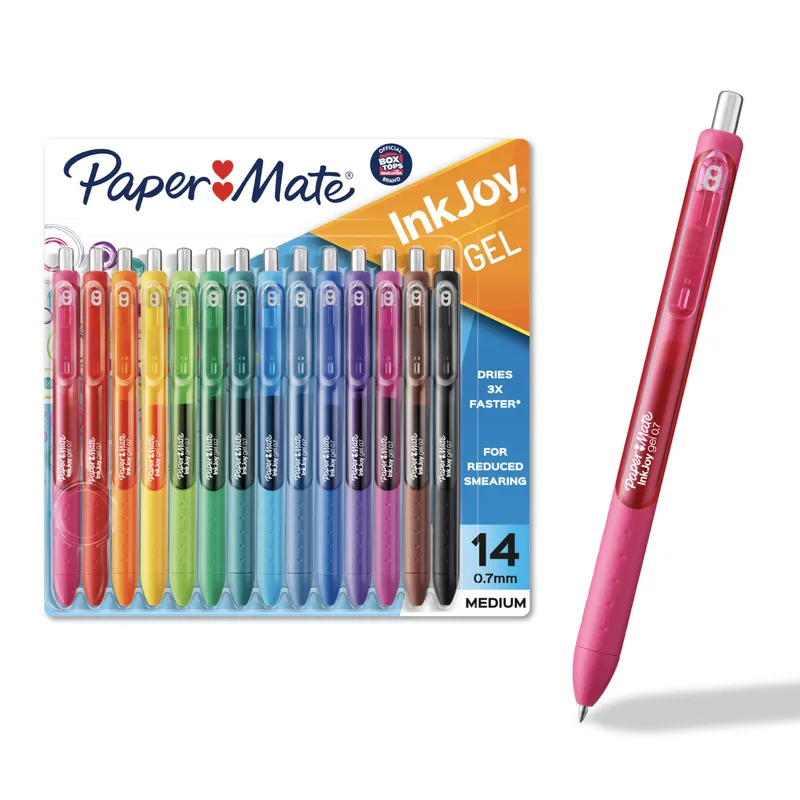
A soft pen you like holding
Physical comfort is not a small detail here. On a bad day a pen you dislike is one more small friction, and friction is what you are trying to reduce. If you have a pen you enjoy, use it.
View on AmazonThis page may contain affiliate links to products we think are worth considering. If you buy through a link, we may earn a small commission at no extra cost to you. Our recommendations are independent, and they are suggestions, not prescriptions.
If the writing makes it worse
Some nights the page takes you somewhere difficult, and the honest thing to stop is sometimes the right thing. A few rules that help:
- Do not write past the point of overwhelm. You can close the page mid-sentence. A journal is not a record of how far you got.
- Do not read back more than once. Re-reading turns writing into rumination, and rumination is the thing you were trying to interrupt.
- Write it, then close the book and change your physical position. Stand up, go somewhere else, wash a glass. This prevents the material from following you around.
- If a night opens something larger than a journal can hold, that is a good moment to talk to someone. Our when journal prompts feel too intense covers how to tell the difference and what to do next.
Making it survive a bad week
Three minutes is the whole practice. Set a timer rather than aiming to fill a page, because a page has no end and a timer does.
Keep a streak you cannot lose. Writing one line still counts. This matters more than it sounds, because the most common way people quit journaling is not a hard week, it is a missed day that becomes an excuse.
Vary the time, not the habit. Some nights a morning entry works better. Switching the time keeps the habit alive on weeks when the original slot does not.
Read back once a month, not once a night. A monthly skim is where patterns become visible, and it is also the safest time to notice that something has been going on for months.
If you want a structured version, our journal practice for reclaiming your time covers the fifteen-minute format, and 3-minute journaling is the shortest version that still works.
This is a self-reflection resource, not a therapeutic intervention. Writing can surface difficult material, and for some people that belongs with a qualified health or mental-health professional rather than with a notebook. If you feel unsafe or overwhelmed, please reach out for support rather than trying to work through it alone.
Further reading
- When journal prompts feel too intense — how to tell when a prompt is opening more than you expected.
- 3-minute journaling: a format that survives bad weeks — the shortest useful version.
- Journal practice for reclaiming your time — a structured fifteen-minute format for when you want more.
- Shadow work prompts for people-pleasing — a worked example of prompts aimed at a specific pattern.
Sources
- Expressive writing and wellbeing — American Psychological Association on expressive writing research.
- Written disclosure and health outcomes — peer-reviewed review of writing about difficult experiences.
- Habits and behaviour formation — research on keeping small practices going.
Continue gently
A Journal Practice for Reclaiming Your Time
Ten honest minutes a week, written for one purpose: noticing where the hours actually went. Includes a weekly template and what to do when it feels pointless.
10 Inner Child Prompts for Hard Days
Ten short, soft journaling prompts for the days when nothing is working, written to take under ten minutes and ask nothing difficult of you.
Inner Child Journaling: A Gentle Practice for Self-Connection
A non-clinical inner child journaling practice with prompts, a clear stopping point, and options for emotionally difficult days.