The inner child prompts already on this site ask for a fair amount: a letter, addressed and sealed, written in one sitting. That is a good exercise on an ordinary evening. It is not what you need at nine at night when the day has already been too much.
These ten are built differently. Each one can be answered in a sentence. None of them require you to be calm, insightful, or in a good mood. If you answer one and stop, that counts as having done it.
What this is for
Inner child work is a widely used metaphor rather than a clinical technique, and it is worth being honest about that. What it describes is real and well-documented: patterns formed in childhood that continue to operate in adulthood, particularly around rejection, criticism, being left out, and needing approval.
The prompts below work by putting a specific question to a specific part of yourself. The questions are gentle on purpose, because a hard prompt on a hard day tends to produce a shut-down rather than an answer.
Our longer inner child letter writing page is worth doing when you have more room. Our inner child journaling for self-connection covers the general approach.
The ten prompts
1. What did the adults in your house do when they were tired? Write what you observed, not what you felt about it.
2. What did you understand, as a child, that adults did not actually say?
3. Who were you when nobody was watching? Describe the version of you that did not have to manage anything.
4. Write one sentence you needed to hear then, and are still waiting to hear.
5. What did you learn to say instead of what you meant?
6. Name something you are still trying to be good at that no one was ever actually praised for.
7. What did you do to be easy to be around? Look at that behaviour now and describe what it was for.
8. Who in your life now makes you feel like you did not have to be anything?
9. What would you let yourself want, if wanting were safe?
10. Write a short note from your present self to that younger one. Two sentences is enough.
A suggested tool
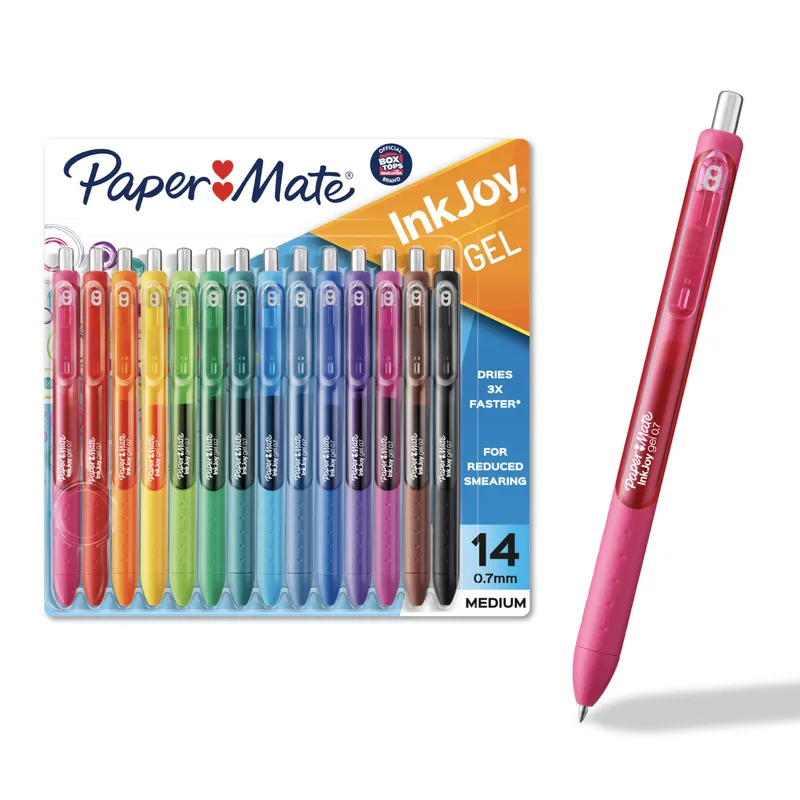
A soft pen you like holding
Physical comfort is not a small detail here. On a bad day a pen you dislike is one more small friction, and friction is what you are trying to reduce. If you have a pen you enjoy, use it.
View on AmazonThis page may contain affiliate links to products we think are worth considering. If you buy through a link, we may earn a small commission at no extra cost to you. Our recommendations are independent, and they are suggestions, not prescriptions.
How to use them when it is hard
Use one prompt, not ten. Reading all ten and answering none is a common failure mode. Pick the one that snagged, answer it badly, and stop.
Write by hand if you can. Screen-based writing tends to make this kind of exercise more detached. Paper slows you down, which is the point.
Set a timer for five minutes. Open-ended journaling on a hard day becomes ruminating, and rumination is the opposite of what this is for. A timer gives you a container.
Answer in the present tense. Not what you felt then, but what you would say now. This keeps the older self at a slight distance, which is what makes the exercise usable when you are depleted.
Stop if you stop. There is a version of this where you stop halfway through a hard prompt and feel worse and abandon the practice. Stopping is a legitimate outcome. Our guide to when journal prompts feel too intense has smaller alternatives, and 3-minute journaling is the lowest-effort version on the site.
What usually comes up
Prompt 7 produces the most reaction for most people. Behaviour you developed to be easy to be around is often the most loyal and the most costly, and looking at what it was for tends to produce a grief that nobody warned you about: for the child who had to be that, and for the adult who is still being it.
Prompt 4 is the one people find most awkward and most useful. The sentence you needed to hear then is usually short and usually obvious, which is exactly why it was never said.
Prompt 9 is the one worth returning to when the days are better. Wanting tends to be the thing that got trained out, and it comes back slowly.
If it becomes too much
Writing about early experiences can surface strong material, and occasionally people find that opening this door leads somewhere they are not equipped to manage alone. Signs that you should stop writing and get support: you cannot stop thinking about what you wrote, you are sleeping worse, you feel persistently destabilised, or the material involves something you have not told anyone.
A qualified health or mental-health professional is the right contact for any of those, and for ongoing distress generally. Some of what is described here is also covered in our page on shadow work for beginners.
This article is educational and is not therapy or medical advice.
Further reading
- Inner Child Letter Writing — the longer version, for when you have more room
- Inner Child Journaling for Self-Connection — the general approach
- When Journal Prompts Feel Too Intense — what to do when writing is too much
- Self-Compassion When You Feel Small — the daily version of the same work
Sources
- PubMed: Childhood maltreatment and adult emotional regulation
- APA: Building your resilience
- Frontiers in Psychology: Self-compassion and emotional regulation
- National Institute of Mental Health: Coping with stress
Continue gently
Inner Child Journaling: A Gentle Practice for Self-Connection
A non-clinical inner child journaling practice with prompts, a clear stopping point, and options for emotionally difficult days.
Inner Child Dialogue: A Letter-Writing Practice
A gentle letter-writing practice for self-connection, with clear limits for moments when reflection feels too intense.
Meeting the Different Versions of You: An Inner Child Practice
Most people hold several internal versions of themselves at once. A guided exercise for writing to the ones you outgrew, abandoned, or never met.