Saying no is treated as a skill, as though the difficulty were in finding the right words. Mostly it is not. The difficulty is that a plain refusal arrives in your body as a small alarm, and the reflex to explain, soften, or offer an alternative fires before you have decided anything. By the time you have written three sentences justifying a free evening, the no has already been negotiated down to a maybe.
This guide is about that reflex, and about what to do with the guilt afterwards, which is the part that actually costs something.
Why the alarm goes off
A reflexive yes is usually a strategy rather than a preference. If approval has historically been the price of safety, then a request is a small test of whether you are still in danger. The body does not distinguish between a colleague asking for a favour and a parent asking you to justify your plans. It runs the same program.
This is worth naming because the alarm is not evidence. Feeling awful after refusing someone tells you about your history, not about the correctness of the decision. Our why people-pleasing feels hard to stop piece goes further into the mechanism; the practical version is that guilt after a no is a feeling with a cause, not a signal with authority.
The reframe: a no is not a judgement of the other person. It is a statement about your capacity this week. Most refusals are logistics, not rejection, and framing it that way takes out the sting.
The short answer is enough
The most useful change is a smaller one than you expect. Stop writing the paragraph.

A suggested tool
A notepad kept within reach of where you read messages
If your instinct is to reply inside a messaging app, the physical distance of paper changes the feel of it. Write the reply out longhand first if that is available to you; the slowness of handwriting is itself a form of delay.
View on AmazonThis page may contain affiliate links to products we think are worth considering. If you buy through a link, we may earn a small commission at no extra cost to you. Our recommendations are independent, and they are suggestions, not prescriptions.
Before you write back, decide what the sentence has to do. It does not have to soften the refusal, justify it, or repair the other person’s feelings. It has to be understandable and final. Three things do that:
- One sentence. “I cannot help with this one.” Then stop.
- A real reason, or none. “I am already committed that day” is a reason. “It is not like I do anything” is a habit, not a reason.
- No substitute offer. Offering a different task invites a second negotiation you did not agree to have.
The version with three paragraphs of explanation is almost always worse for you. It gives the other person more material to work with, it signals that the no is negotiable, and it hands them an opening to say something that makes you change your mind.
Where the explanation comes from. If you feel a strong pull to justify, notice that the pull is often about protecting you from being seen as unhelpful rather than from being polite. You do not need to be liked in this particular moment. You need to be honest.
The three sentences that carry it
Different refusals need different amounts of room, but the register stays the same: warm, short, unmovable.
The plain one. “I’m going to pass on this.” Works for almost everything and is complete on its own.
The one with a door. “I can’t take this on right now — it would be good to hear how it goes.” Offers warmth without an alternative obligation. Notice this is not a promise of future help; it is a wish for them.
The one that names the limit once. “I take on new commitments in the first week of the month, so I’ll say no to this one.” A stated rule is much easier to defend than an improvised excuse, because it applies in advance and does not require anyone to be singled out.
What to avoid. “I would love to, but…” — the “but” cancels the “I would love to.” “It’s not that I don’t want to” — implies you might be persuaded. “Let me think about it” when you already know, because this buys you the social cost of a no without relieving it.
The guilt is not the signal
You will probably feel guilty anyway. This is the part that surprises people who have read a lot about boundaries and expect them to feel clean. They usually do not, at first.
Guilt after a no is not proof you did something wrong. It is the residue of an old arrangement in which your compliance was the thing that kept you safe. Changing the arrangement produces a feeling before it produces a result, and the result arrives later than the feeling, which is why people conclude the boundary was wrong.
Two things make this more bearable.
Repeat the sentence. Write down what you said and read it back. It will sound shorter and less hostile than it felt. Most of the internal drama is about the version you imagine the other person is having.
Let the relationship prove itself. A person who withdraws over a reasonable no was not in a relationship with your compliance. That is not a loss. It is a delay in finding out.
The second no is easier than the first. Not because the guilt goes away, but because you have evidence that the world did not end. If the first one goes badly, the next one will feel twice as risky, which is an accurate observation about the specific person rather than about boundaries in general.
What to do with the writing
If you find yourself drafting and rewriting the reply, the drafting is usually avoidance, not preparation. Writing the answer down once and sending it is more effective than the fifth revision.
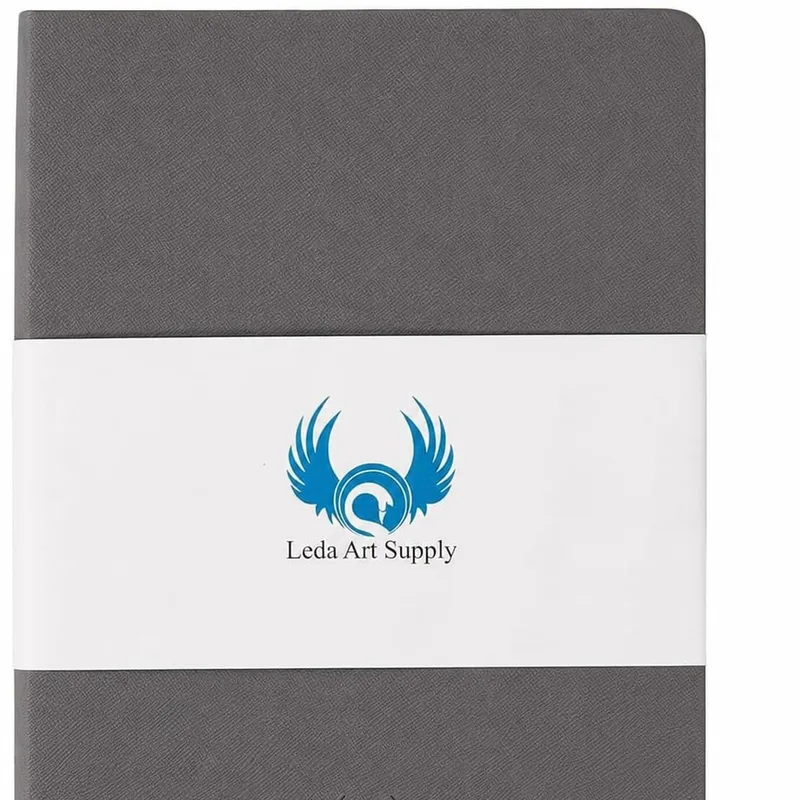
A suggested tool
Soft journal with pen
Having a dedicated journal can make the practice feel like a small ritual rather than a task.
View on AmazonThis page may contain affiliate links to products we think are worth considering. If you buy through a link, we may earn a small commission at no extra cost to you. Our recommendations are independent, and they are suggestions, not prescriptions.
If the request is recurring rather than one-off — a colleague who sends work over, a friend who assumes your weekends — the short no will not fix the pattern. In that case name the pattern directly: “I’m going to stop being the default person for this.” A boundary that addresses a repeated request is more useful than a refusal that only handles the current instance.
Where to start
If you try one thing this week, make it this: the next time you feel the pull to explain, send the one-sentence version instead. No reason, no apology, no offer of another time.
You will feel worse for about ten minutes. Then you will have a piece of evidence about yourself, which is worth considerably more than the comfort you were trying to buy with the paragraph.
This is a self-reflection resource, not a therapeutic intervention. If refusing requests leaves you with a fear or a pressure that does not lift, talking to a qualified health or mental-health professional can help you understand where it came from and what it costs you.
Further reading
- Why people-pleasing feels hard to stop — the mechanism underneath the reflex, and what it was originally for.
- How to set emotional boundaries — the broader frame this fits inside.
- How to pause before you reply to a difficult message — for the seconds before you send, when the drafting starts.
- 15 ways to wind down when you feel overstimulated — for when the no is about reclaiming an evening.
Sources
- Assertiveness and the cost of compliance research — American Psychological Association on assertive communication.
- Self-compassion in difficult moments — Kristin Neff’s research on treating yourself with less cruelty.
- Interpersonal boundaries and distress — peer-reviewed work on boundary-setting and emotional outcomes.
Continue gently
Boundary Scripts for Saying No Without Over-Explaining
Clear, adaptable language for declining requests, asking for time, and holding a limit without turning every no into a long defense.
How to Set Emotional Boundaries Without Losing Yourself
A practical, non-punitive guide to recognizing capacity, choosing clear boundary language, and handling the guilt that may follow.
Why People-Pleasing Feels So Hard to Stop
A compassionate look at the habit of saying yes too quickly, with small ways to create space before you agree to something.