There is a specific moment in every difficult message: the gap between reading it and answering it. Most advice skips that gap and goes straight to what to say. But the content of your reply is decided before you start typing, in the seconds when your body is still reacting to whatever was just done to you by someone else.
The pause is the practice of widening that gap enough to get a vote.
Why the instant reply is so hard to resist
Reacting before thinking is not a character flaw. It is the default setting.
When a message arrives, the first thing that happens is appraisal, not thought. Your brain processes the tone before the content, and if the tone reads as disappointment, criticism, or withdrawal, the stress response starts before you have finished the first sentence. Once that response is running, the fastest way to reduce the discomfort is to end the interaction. Replying does that instantly.
This is why the well-meaning advice to sleep on it fails for a specific kind of message. A message from your manager about a missed deadline at four in the afternoon is not improved by eight hours of distance. You have to reply that afternoon. What you can change is what happens in the twenty seconds between reading it and answering it.
Second reason: speed reads as investment. Replying instantly tells the other person that they have your full attention, that they matter more than whatever else was happening. If your worth to someone is measured partly by your availability, then replying fast is not a habit, it is a form of payment. Our guide to why people-pleasing feels hard to stop covers this in more depth.
Third reason, and the one most people miss: the pause creates accountability. If you answer immediately, there is no record of what you thought before you felt cornered. If you pause, you might still send the same message. But you will know that you considered it.
The six-second practice
The whole practice is: notice the impulse to reply immediately, and let six seconds pass before your hands move.
- Read the message.
- Feel the impulse arrive. It has a texture: heat in the chest, a tightening at the jaw, a sudden urge to fix something.
- Put both hands flat on the desk, or press your feet into the floor. Physical contact buys you the seconds.
- Count six. Slowly. This is slower than it sounds; most people count six in about two seconds.
- Exhale once, longer than the inhale.
- Now read the message again. Not the same read. The second read is usually noticeably calmer, and frequently much shorter.
What usually happens on the second read: the message that felt like an accusation turns out to be a badly worded question. The reply you had drafted in your head contains three things you did not actually mean. You can answer the thing that was said instead of the thing that was felt.
Four techniques for when six seconds is not enough
Draft it, then send it. Write the reply in a notes app or a draft field and leave it for two minutes. You will usually want to edit it. This one is unusually effective because the cost of the impulse drops when you are not typing into the live field with the send button in reach.
Change the channel. If the message arrived by text, reply by email or voice note. Even a three-second change of modality interrupts the sequence. It also gives you natural delay, which is useful when you need it.
Change the physical state. Stand up. Get a glass of water. The reply can wait thirty seconds and nothing bad will happen, and moving your body resets the arousal faster than counting does.
Say that you are pausing. For high-stakes relationships, naming it removes the guesswork: I have read this and I am going to sit with it for a bit. I will come back to you this afternoon. This is honest, it is short, and it is far better than a reply you cannot retract.
A suggested tool
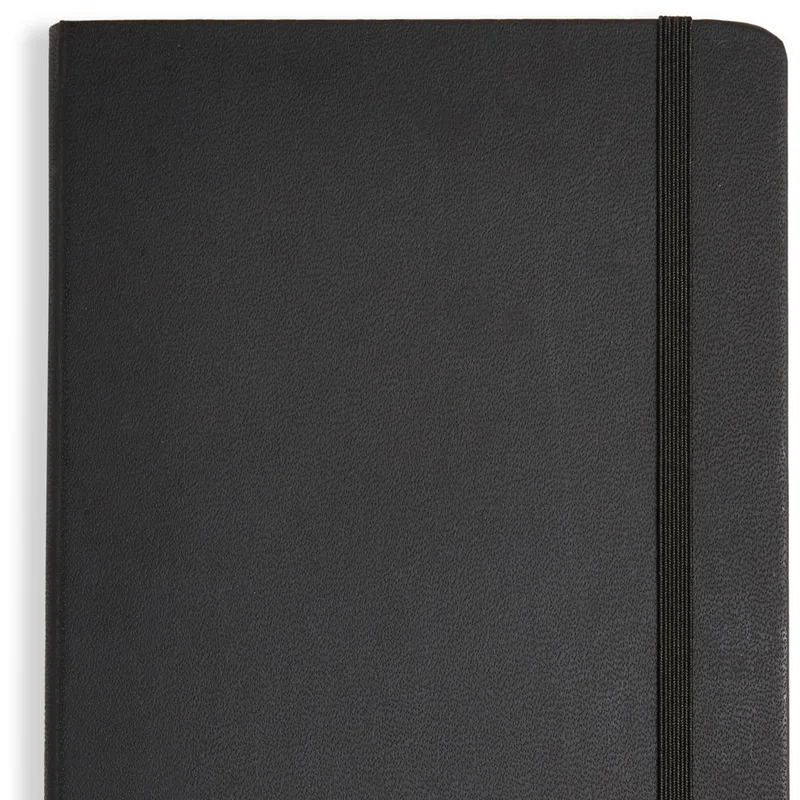
A notepad kept within reach of where you read messages
If your instinct is to reply inside a messaging app, the physical distance of paper changes the feel of it. Write the reply out longhand first if that is available to you; the slowness of handwriting is itself a form of delay.
View on AmazonThis page may contain affiliate links to products we think are worth considering. If you buy through a link, we may earn a small commission at no extra cost to you. Our recommendations are independent, and they are suggestions, not prescriptions.
What to do with the reply you actually send
A pause changes the content, but it does not automatically make the content boundary-shaped. Three things worth adding once you have slowed down:
Separate the person from the request. Sometimes the message contains a reasonable ask attached to an unfair tone. You can decline the ask without accepting the framing.
Keep the length proportional to the problem. A long reply to a short message reads as escalation, whatever you intended. If you are worried your reply is too long, it probably is.
Name the timing instead of the feeling. Not I am too tired to deal with this, but I do not have capacity for this before Thursday. Time boundaries are concrete and hard to argue with in a way that emotional ones are not.
Our boundary scripts for saying no has phrasings you can adapt, and emotional boundaries without guilt covers the part where the reply is fine and you still feel bad afterwards.
The people who never learn to pause
Some people have trained themselves out of any gap at all. If replying instantly is the only available response for you, treating it as a habit to correct will not work. That level of reactivity usually sits on top of something: a history in which slow replies were punished, a workplace where availability was the price of security, or a fear that the relationship will not survive a gap in responsiveness.
That last one is worth saying plainly, because it is the one people are least willing to look at. Some of the relationships where you reply instantly are ones where a pause has historically been met with withdrawal, and the cost of finding out is too high to test. If that is your situation, the pause does not have to start with them. Start with a colleague, a friend, or a low-stakes message, and let the evidence accumulate. Our shadow work prompts for people-pleasing go deeper into the pattern itself.
If reaction speed is causing distress that spills into sleep, work, or relationships, that is worth discussing with a qualified health or mental-health professional. This article is educational and is not therapy or medical advice.
Further reading
- Why People-Pleasing Feels Hard to Stop — the mechanism underneath the instant reply
- Boundary Scripts for Saying No — wording for the reply you send after the pause
- Shadow Work Prompts for People-Pleasing — prompts for the times the yes was automatic
- 15 Ways to Wind Down When Overstimulated — when the reactive state is the problem rather than the message
Sources
- PubMed: Cortisol and the stress response to social-evaluative threat
- Frontiers in Psychology: Digital communication and social comparison
- Centre for Humane Technology: How to reclaim your attention
- National Institute of Mental Health: Coping with stress
Continue gently
How to Ask Questions at Work Without Apologising
Questions get read as challenges when they arrive with a preamble. A way to ask plainly and still sound like a colleague, not a problem.
How to Ask for Help When You Are Used to Coping Alone
Why asking for help is so much harder than it should be, and a way to make the request smaller than the thing you actually need.
How to Bring Up Something That Has Been Bothering You
A structure for naming an unnamed friction in a relationship, without turning it into a fight or a complaint.