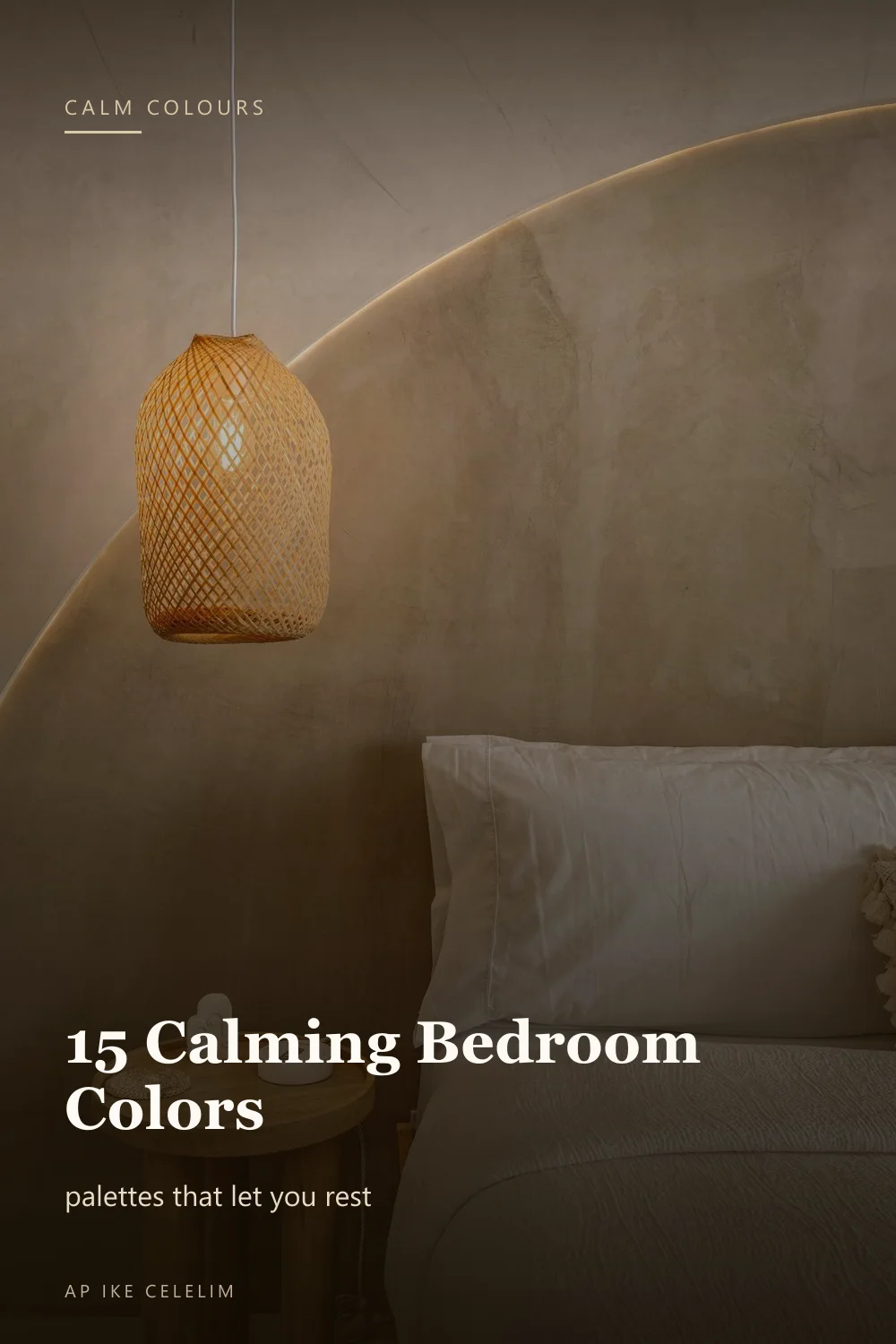
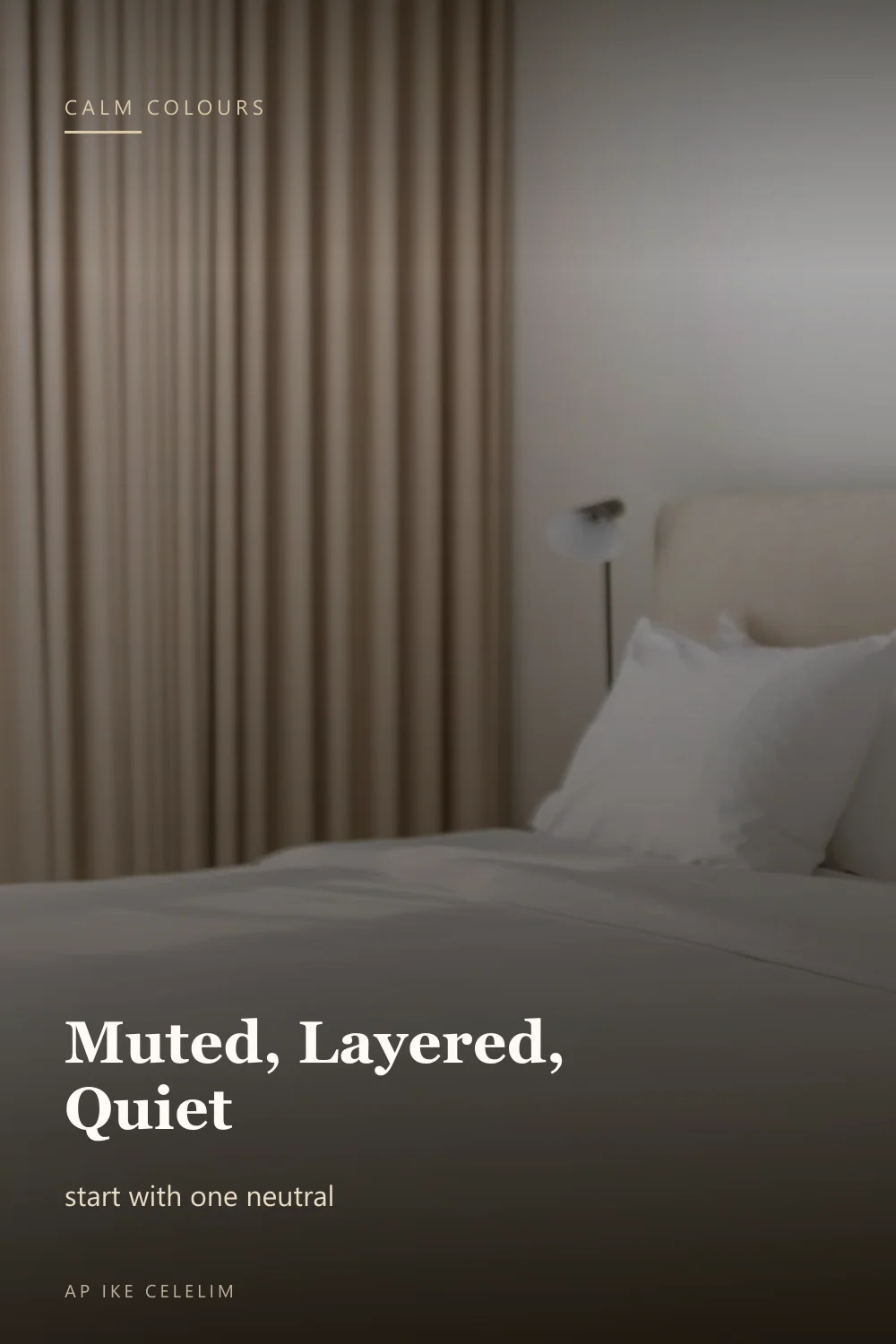
A bedroom color is not a mood board decision; it is what your eyes stop adjusting to every evening. That is the practical test for any palette here: does this room need your attention, or does it let you stop having it.
The fifteen directions below are grouped by where the color goes. Most people can get the effect they want from textiles alone. If you are repainting, take swatches home and look at them at night and at dawn, because paint changes dramatically across a day.
Where to Start
1. Decide whether the room should recede or hold
Receding rooms use low-contrast, mid-tone colors. Rooms that should feel composed use a darker wall with lighter textiles. Deciding first saves repainting twice.
2. Start with the largest neutral you actually like
Whites, greys and beiges cover most of the wall. If your large neutral feels slightly cold, warming it a half-step does more than any accent colour.
3. Match the wall to the floor before the furniture
A floor that reads warm under a wall makes the wall look cool. Checking the pair first prevents the common complaint that a room is not quite right.
4. Put the color on the bed, not only the walls
Bedding is the largest colour surface in most bedrooms, which makes it the fastest lever to pull.

A suggested tool
Linen bedding set
Natural linen softens over years and washes well at lower temperatures, which suits a room you want to keep rather than replace.
View on AmazonThis page may contain affiliate links to products we think are worth considering. If you buy through a link, we may earn a small commission at no extra cost to you. Our recommendations are independent, and they are suggestions, not prescriptions.
5. Take one photo of the room at night before you change anything
Bedroom lighting distorts colour more than daylight does. A night-time photo is the reference that tells you whether a change worked.
Neutrals That Breathe
6. Warm off-white
Not pure white. An off-white with a grey or a beige undertone stops the walls bouncing light straight back at the ceiling at night.
7. Greige
A grey warmed with beige, which sits between the two most popular neutral families and pairs easily with both wood and metal.
8. Soft clay or blush
The warm neutral that reads as restful without reading as formal. It pairs especially well with linen and with wood in mid tones.
9. Muted sage or olive
Green desaturated until it is closer to grey. The greens that most people find restful are the ones that are no longer obviously green.

A suggested tool
Paint colour sample card
Sample cards let you compare a whole palette in your own light. Larger sample boards are better, but a card costs very little and rules out the obvious mistakes.
View on AmazonThis page may contain affiliate links to products we think are worth considering. If you buy through a link, we may earn a small commission at no extra cost to you. Our recommendations are independent, and they are suggestions, not prescriptions.
10. Warm mid-grey
A mid grey with warmth in it grounds a room and hides dust and marks better than a pale wall does.
11. Deep muted blue
A dark blue with grey in it reads as evening rather than as a primary colour. It makes a room feel later and quieter, which is why it is a common bedroom choice.
Muted Accents and Pairings
12. Dusty blue with cream
A blue that has grey mixed into it, on cream or off-white walls. Pairing a single accent with a neutral is more restful than two accents.
13. Terracotta with soft white
A warm clay accent against a lighter wall. Terracotta reads as grounded and works in small doses without becoming a feature.
14. One deep accent, used once
A dark pillow, a throw, or a rug in a saturated colour, against an entirely neutral room. One accent reads as intention; three read as a decision waiting to happen.
A suggested tool
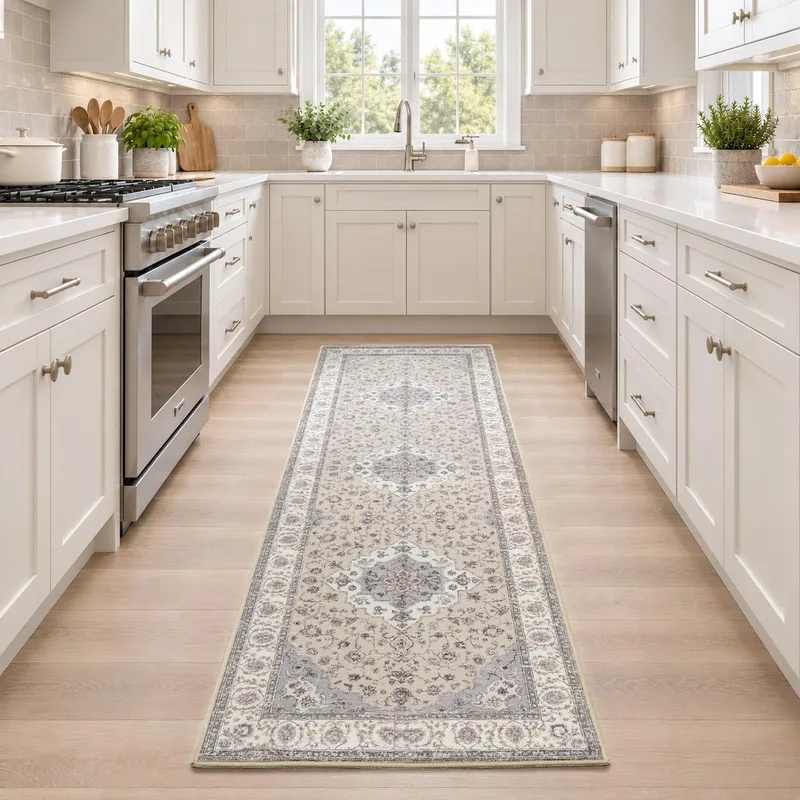
Wool rug for a bedroom floor
A large rug makes a room feel settled because it unifies the furniture footprint, and wool or wool blends wear well in a bedroom.
View on AmazonThis page may contain affiliate links to products we think are worth considering. If you buy through a link, we may earn a small commission at no extra cost to you. Our recommendations are independent, and they are suggestions, not prescriptions.
15. Match bedding to curtains, and leave the walls neutral
Curtains and bedding are the two largest surfaces a person sees from inside the room. Matching or closely relating them, and keeping the wall plain, is the most reliable way to make a bedroom feel composed.
Colour is a comfort measure, not a treatment. None of this needs to happen quickly, and swapping bedding is a legitimate way to change a room. If you are sleeping badly, exhausted, or noticing persistent low mood, a qualified health or mental-health professional can help you explore what fits your situation.
Further reading
- Slow Living Without Escaping Your Real Life — the hub for this cluster
- The Light, Scent, and Texture of a Restful Room — the sensory system behind a restful room
- Creating a Home Sanctuary on Any Budget — what to do before you repaint
- 15 Warm Lighting Ideas for a Cozy Bedroom — the other half of the same problem
Sources
- U.S. Naval Observatory: Seasons of the year
- Sleep Foundation: How light affects your sleep
- NHS: Every Mind Matters - sleep and wellbeing
Continue gently
15 Autumn Equinox Rituals to Mark the Turning Season
Fifteen gentle autumn equinox rituals for marking the turning season—gratitude, small harvests and slow ceremonies you can keep at home.
15 Cozy Fall Activities to Do Indoors on a Grey Day
Fifteen cozy fall activities to do indoors on a grey day—baking, reading, crafts and slow rituals that make an autumn afternoon feel complete.
15 Cozy Fall Self-Care Ideas for Cooler Days
Fifteen cozy fall self-care ideas for cooler days—warm drinks, soft layers, evening rituals and small treats that make autumn feel nurturing.